Tell Family Member I Love You in Japanese
Sensei, how exercise you say I love you in Japanese?
This is one of the mutual questions that I receive from my students nigh every semester. I commonly answer that there is not merely one way. At that place are several ways to say "I love you" in Japanese and it would differ depending on the context and what kind of feeling you are trying to convey.
- 愛してます(あいしてます)[aishite masu] (literally) love … Polite speech
- 愛してる(あいしてる)[aishiteru] love … Casual speech
- 好きです(すきです)[suki desu] similar … Polite speech
- 好き(すき)[suki] like … Casual speech
- 大好きです(だいすきです)[daisuki desu] like very much … Polite speech
- 大好き(だいすき)[daisuki] similar very much … Coincidental speech
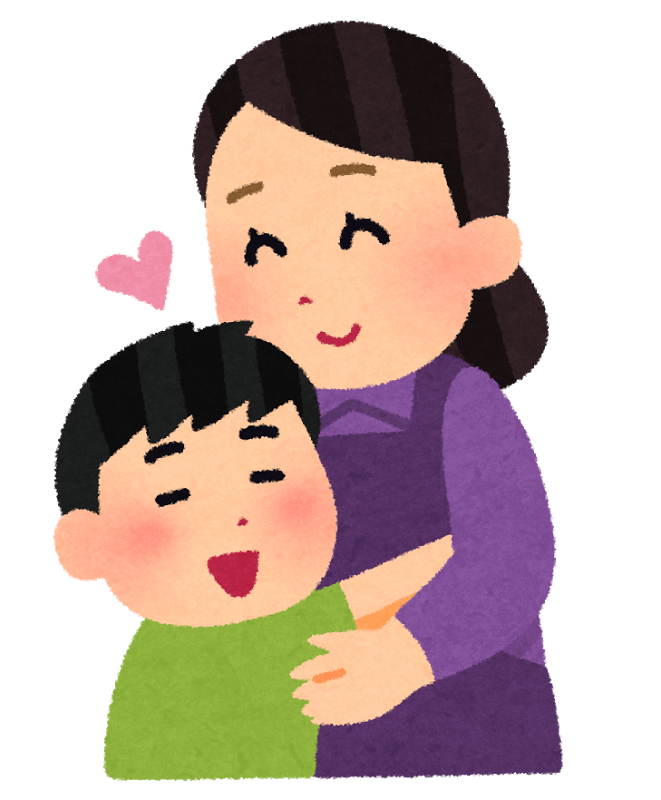 If a immature child wants to say "I dearest you, mom!" he or she would pick #6 (like very much) and say ママ、大好き! [Mama, daisuki!]. Japanese children first larn casual speech at dwelling as they grow up. We do not use polite speech to our straight family members, hence nosotros learn casual speech get-go.
If a teenage daughter wants to confess her feelings to a boy, she would pick either #3 (like – Polite) or #4 (similar – Casual). It will depend on her personality and also the relationship/friendship she possesses with the male child.
Due to the word 愛(あい)[ai], #1 (honey – Polite) and #2 (love – Casual) convey deeper and more mature feelings. This is why you cannot use them when you want to say "I love water ice foam!" You will have to utilise #6 (like very much) and say アイスクリーム大好き! [aisu kuriimu daisuki!]
The feeling of beloved is diverse and quite complicated. The style Japanese perceive love seems to be a petty unlike from the English-speaking earth and information technology shows in the language. This is what I noticed after I left Nippon and moved to the States.

2 Dissimilar Nouns for "Honey" in Japanese
In English language, there is just one Noun that represents your affectionate feeling toward another person, which is "beloved."
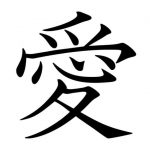 In Japanese, nosotros have two different nouns. They are こい(恋)[koi] and あい(愛)[ai].
Many of my students watch Japanese anime and drama. Because of this, they are normally familiar with the vocabulary like [koi] or [ai]. However, very few know the divergence betwixt the two. They represent two singled-out kinds of love.
The first ane, こい(恋)[koi] refers to the exciting and romantic feeling that yous experience for someone whom y'all do not know well even so and wish to know him/her improve. When you have a crush on someone, [koi] is the word that expresses the feeling you are experiencing. Yous can say [Johnny Depp ni KOI shiteru] "I am in the state of KOI toward Johnny Depp" pregnant "I accept a crush on Johnny Depp" The exciting and longing feeling that makes your heart race is the cardinal hither.
When you are still in an early on phase of a relationship and feel fresh and excited about seeing the person, yous are all the same in the state of [koi] too.
In the same respect, the phrase "love at the start sight" or "fall in dear" refers to the feeling of KOI in Japanese. When we fall in love, we say "autumn in KOI" [KOI ni ochiru], and non "autumn in AI." We never say [AI ni ochiru].
The discussion あい(愛)[AI] refers to much deeper feeling in Japanese. In many cases, it grows over time. So, it is very unlikely that you feel [AI] toward someone who y'all simply met yesterday. Loving someone in the sense of [AI] also requires maturity on the person's side. It often involves other essential feelings such as respect, trust and endearing feelings toward the target.
Because of this, a parent can あいする[AI-suru] (dearest) his/her child just they would never こいする [KOI-suru] his/her kid.
Husband and wife of many years volition develop the feeling of [AI] toward each other. It is based on the bonds, trust, and history they share together. Sometimes, y'all may hear a Japanese hubby says "I am even so in the state of [KOI] toward my married woman." It is him saying that he still possesses the fresh and exciting feelings toward his wife as well equally deep beloved.

Why Different Ways to Say "Honey"?
To me, it makes perfect sense to take different ways to say "beloved" because the feelings I experience within me toward my mother, my partner, or things I beloved like sushi are totally different. In fact, I was quite surprised when I learned that in English, there is simply one discussion to express all those dissimilar feelings.
You lot say "I love you" in English when you:
- Confess your feeling to someone.
- Express loving feelings towards family members similar your mother, father, or siblings.
- State your likings such equally "I love Jonny Depp," "I honey my dog" or even "I love scary movies!"
To me, these are completely different feelings. Hence, it makes perfect sense that they are expressed differently in my linguistic communication.
Beneath are some dissimilar situations where we may (or may not) say "I dearest y'all" in Japanese.
When You Confess Your Feelings
As I mentioned before, if you wish to reveal your feelings toward someone, you volition have to say either すきです [suki desu] (similar – Polite) or すき [suki] (like – Casual) depending on the relationship you already have with the person.
If your target is a co-worker who you take interacted just at piece of work, as a grown-up, you lot would want to stick to the polite spoken communication and say すきです [suki desu].
たなかさんが すきです。[Tanaka-san ga suki desu] … I have a feeling for you, Tanaka-san.
 On the contrary, if you lot are going to confess your feelings toward a childhood friend, you would cull casual speech and say すき [suki].
けんが すき。[Ken ga suki] … I have a feeling for you, Ken.
すきです [suki desu] or すき [suki] literally mean "I similar you." Notwithstanding, in this item context, it means more than like "I have a feeling for you" or "I honey you" in English and is virtually appropriate at this phase where you lot have not established a solid relationship as a couple.
By the way, if you had held the loving feeling toward the target for many years without confessing and the feeling is already very deep inside you lot, you lot may choose the word [AI] and say あいしてます [AI shite masu]. Again, information technology depends on the feelings yous possess toward the person.
On a side note, because [AI] is such a serious and heavy word, if yous use it to confess your feeling, information technology may scare the person or make him/her feel somewhat burdened without a solid foundation betwixt the two. Exist careful.
I Love You lot to Your Partner
If the relationship with your partner is long and mature, like a married couple, it is appropriate to say あいしてる [AI shiteru] to the person and information technology actually shows the depth of the feeling yous accept toward your significant other.
Some couples, even though they are in the relationship for a long time, may nonetheless experience shy to say [AI shiteru] and merely say すき [suki] (I like yous) or だいすき[dai suki] (I similar you very much) on a daily footing. Again, this is due to the serious and heavy tone that the word [AI] possesses.
Being married to an American hubby, I've realized the phrase "I beloved you" or "Love yous" in English language is used more as a greeting between husband and wife.

"Ok, I'thou off to work now. See yous later. I love you"
The "I love yous" here in this context is not [AI shiteru] traditionally, although I have noticed that young couples nowadays in Japan began using the phrase rather bluntly on a daily ground. (but never in public)
To me, [AI shiteru] is the expression that would come out when I am in the special moment with my partner. I would most probable exist in his arms or looking at his optics, and acknowledging the deep feeling that I possess towards him. Then and only then, [AI shiteru] feels totally natural to me.
I Love You to Your Family Members
This is a flake hard to explain because we normally do not express our dearest with words among family members.
 Yep, as I said before, a young child would say "I love yous mommy (or daddy)!" ママ、大好き! [Mama, daisuki!]
A female parent/father would say to their kid "I beloved you lot Miki" [Miki-chan, daisuki (dayo)]. However, this exchange will quickly disappear when the child passes a certain age. (I would say half dozen-viii years old perhaps?)
Believe it or not, I don't recall my parents e'er said "I dear you" to me in my unabridged life. They may have said "Yuko, daisuki (dayo)" when I was very, very young but I don't retrieve information technology. Nevertheless, I know 100% that they honey me. How do I know, y'all ask?
I think it is what I sensed every bit living with them and growing up under their intendance. Perchance it is due to things that they have taught me, things that they have done for me, or the fashion they look at me, etc. They have washed countless things for me and my sis, and I know what they did are all based on love. I felt it. So, they didn't take to tell me they love me with words. I knew it and I still know.
Same goes for me not maxim "I beloved you" to my family in Japan. If I have to option one phrase that would limited the deep love I have for my family, it would be ありがとう [arigato] "Cheers." I say [arigato] a lot to my parents and sister, even for small things they do for me, and that is my way of expressing beloved and appreciation towards them.
How Practise Y'all Say I Honey You in Japanese?
The answer to that question, equally you now sympathise, varies depending on the situation. Therefore, if you have a need to say "I love you lot" to someone in Japanese, be sure to pick the right phrase from what I take listed at the beginning of this post.
Don't simply ask your Japanese friend "How do you say I love you in Japanese?" Give him/her the context where you lot wish to say "I beloved yous" to someone like this:
"I have a large crush on this guy at work. Since I was hired but three weeks ago, I don't know much about him. The simply time I have spoken to him is in the elevator just saying Hi. How do I say I love you to this guy?"
😉
I hope you enjoyed this article and it helped yous sympathise how Japanese people perceive and express honey. I believe the feeling of love is universal. However, it indeed is interesting that different cultures express it differently, isn't it?
How practice you lot limited love in your native language (if you speak other than English)? Feel free to leave examples or comments below, I would love to know!
裕子先生 (ゆうこせんせい)Yuko-sensei
Source: https://smilenihongo.com/how-do-you-say-i-love-you-in-japanese
0 Response to "Tell Family Member I Love You in Japanese"
Postar um comentário